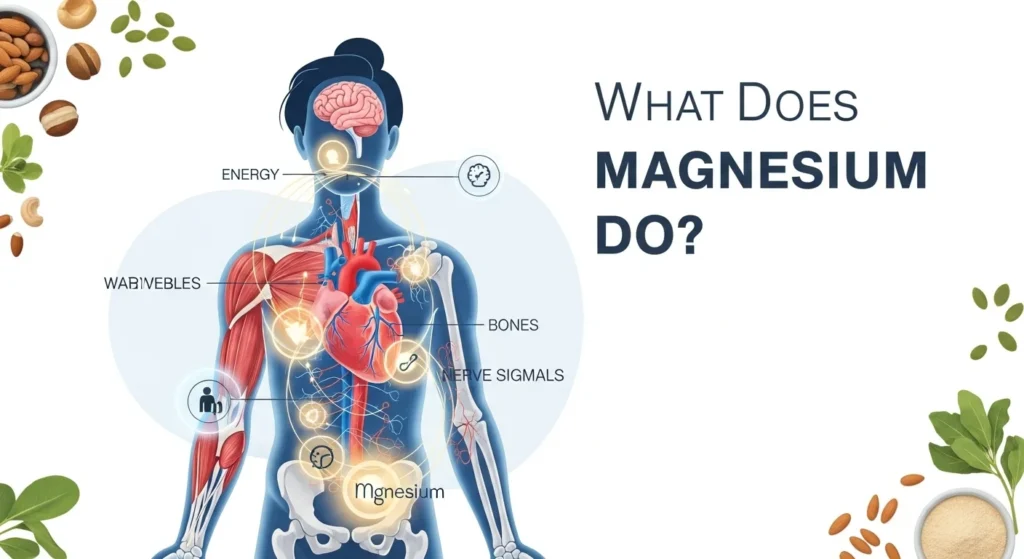
The first time I heard about magnesium, it was in a casual conversation about sleep. Someone said, “Try magnesium—it helps you relax.” That made me curious.
How could one mineral do that? As I looked into it, I realized magnesium isn’t just about sleep—it plays a role in hundreds of processes inside your body. Surprisingly, many people don’t even realize how important it is until they feel low energy, muscle cramps, or stress. So, if you’ve ever wondered what magnesium actually does, this simple guide will explain everything clearly.
Quick Answer
Magnesium helps your body produce energy, support muscles and nerves, and keep your heart and bones healthy.
What Does Magnesium Do?
So, what does magnesium do exactly? Magnesium is an essential mineral that your body needs to function properly every day. In fact, it helps with over 300 biochemical reactions in your body.
Plain-English Explanation
- Magnesium helps your body turn food into energy
- It supports muscle movement and relaxation
- It helps your nerves send signals
- It keeps your heart rhythm steady
Why Your Body Needs It
Without enough magnesium, your body can’t perform basic tasks efficiently. That’s why it’s so important to get enough through food or supplements.
Example
- After exercise, magnesium helps your muscles relax and recover
Bold Summary:
Magnesium supports energy, muscles, nerves, heart health, and overall body function.
Where Does Magnesium Work in the Body?
Now that you understand what magnesium does, let’s look at where it works.
Key Areas
- Muscles: Helps them contract and relax
- Nervous system: Supports brain and nerve signals
- Heart: Keeps heartbeat steady
- Bones: Strengthens bone structure
- Cells: Helps produce energy
Function Style
- Constant: Works all day
- Essential: Needed for survival
- Invisible: You don’t feel it directly
Even though you don’t notice it, magnesium is always active.
Real-Life Benefits of Magnesium
Here are some everyday ways magnesium helps your body:
- supports better sleep and relaxation
- reduces muscle cramps and tension
- helps manage stress levels
- supports heart health
- improves energy production
- helps maintain strong bones
- supports healthy blood pressure
- helps with recovery after exercise
These benefits show how important magnesium is in daily life.
When You Need More Magnesium
Sometimes, your body may need more magnesium than usual.
Signs You May Be Low
- muscle cramps or spasms
- fatigue or low energy
- trouble sleeping
- irritability or stress
- weakness
Do Take Care When:
- you eat a poor diet
- you’re under a lot of stress
- you exercise heavily
Don’t Ignore When:
- symptoms keep happening
- you feel constant fatigue
- muscle issues become frequent
Quick Comparison Table
| Situation | Example | Why It Matters |
|---|---|---|
| enough magnesium | good energy levels | body works well |
| low magnesium | cramps, fatigue | poor function |
| active lifestyle | high magnesium use | need more |
| poor diet | low intake | risk increases |
Foods Rich in Magnesium
To keep your levels healthy, you can eat magnesium-rich foods:
- leafy greens (spinach)
- nuts (almonds, cashews)
- seeds (pumpkin seeds)
- whole grains
- bananas
- dark chocolate
- legumes (beans, lentils)
Eating a balanced diet helps maintain good magnesium levels.
Frequently Asked Questions (FAQs)
1. What is magnesium mainly used for?
It helps with energy, muscles, nerves, and heart health.
2. Does magnesium help with sleep?
Yes, it can help your body relax and improve sleep quality.
3. Can you take magnesium daily?
Yes, but it’s best to follow recommended amounts.
4. What happens if you don’t get enough magnesium?
You may feel tired, weak, or have muscle cramps.
5. Is magnesium good for stress?
Yes, it helps support calmness and relaxation.
6. Should I get magnesium from food or supplements?
Food is best, but supplements can help if needed.
Final Thought
So, what does magnesium do? In simple terms, it helps your body stay energized, relaxed, and functioning properly. From supporting your muscles and nerves to helping your heart and bones, magnesium plays a huge role in your everyday health.
Even though it works quietly in the background, its impact is powerful. That’s why it’s important to maintain healthy levels through a balanced diet and lifestyle.
In the end, magnesium isn’t just a mineral—it’s a key part of keeping your body running smoothly every single day.

Abdul Hadi is a writer who loves creating funny and engaging content. He enjoys making readers laugh with clever jokes and puns. His work focuses on humor that appeals to people of all ages.