The first time I heard someone mention their spleen, I remember thinking, “Where is that, and what does it even do?” Unlike the heart or lungs, the spleen isn’t something most of us notice every day—until something goes wrong.
Surprisingly, even though it’s small, it plays a key role in your body’s defense and blood health. If you’ve ever wondered what the spleen does, this guide will explain it in an easy, friendly way, so you’ll understand why it matters.
Quick Answer
The spleen helps filter blood, fight infections, and store healthy blood cells for the body when needed.
What Does the Spleen Do?
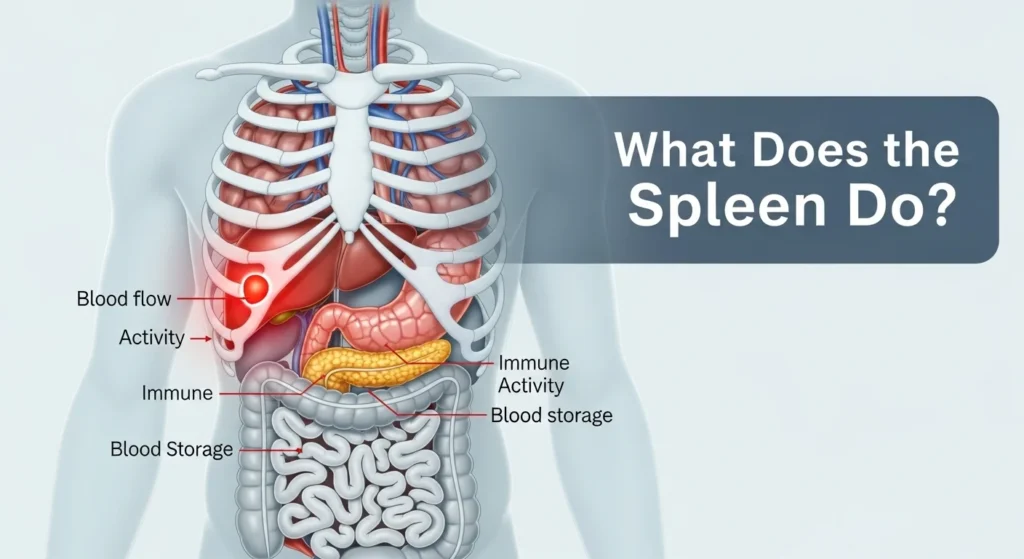
So, what does the spleen do exactly? The spleen is an organ located on the left side of your abdomen, just under the rib cage. While it’s small—about the size of a fist—it has several important functions.
Main Functions
1. Blood Filtration
The spleen filters your blood, removing old or damaged red blood cells and recycling useful parts like iron.
2. Immune System Support
It produces white blood cells and antibodies that help your body fight infections and diseases.
3. Blood Storage
The spleen stores extra blood and platelets, which can be released into the body during injury or blood loss.
4. Recycling Red Blood Cells
It breaks down worn-out red blood cells and sends their components (like iron) back to the body for reuse.
Example
- If you get a cut and lose blood, your spleen can release stored blood cells to help maintain circulation.
Bold Summary:
The spleen filters blood, supports immunity, and stores blood cells to keep the body healthy.
Where Is the Spleen Located?
The spleen sits in the upper left side of your abdomen, tucked under your rib cage, just behind your stomach. It’s protected by your ribs but is still vulnerable to injury from accidents or trauma.
Why the Spleen Is Important
Even though you can live without a spleen, it plays a vital role in keeping your body strong and healthy.
Key Roles
- Blood quality: Removes damaged cells and debris
- Immune defense: Detects and fights infections
- Emergency response: Provides extra blood during injury
Without a spleen, your body is more prone to infections, so other organs and vaccines help compensate.
Common Spleen Problems
Sometimes the spleen can have issues that affect its function.
Common Conditions
- Enlarged spleen (splenomegaly): Can cause pain and pressure in the upper left abdomen
- Ruptured spleen: Often due to injury; can be life-threatening
- Blood disorders: Certain conditions may overwork the spleen
Symptoms to Watch For
- Pain or fullness in the upper left abdomen
- Feeling full without eating much
- Fatigue or weakness
- Frequent infections
Quick Comparison Table
| Condition | Symptoms | Action Needed |
|---|---|---|
| enlarged spleen | pain, fullness | see doctor |
| ruptured spleen | severe pain, shock | emergency |
| overactive spleen | low blood counts | medical care |
Can You Live Without a Spleen?
Yes, but with some precautions.
What Changes Without a Spleen?
- Increased risk of infections
- Body relies more on liver and lymph nodes for immune defense
- Vaccines and antibiotics may be recommended
Most people live healthy lives, but they need to take extra care to prevent infections.
How to Keep Your Spleen Healthy
Maintaining a healthy spleen mostly involves overall wellness.
Tips for Spleen Health
- Eat a balanced diet rich in fruits, vegetables, and lean protein
- Exercise regularly to support circulation
- Avoid injuries to the upper left abdomen
- Stay up to date with vaccines
Frequently Asked Questions (FAQs)
1. What is the main function of the spleen?
It filters blood, supports immunity, and stores blood cells.
2. Can you live without a spleen?
Yes, but you may need extra precautions against infections.
3. What causes an enlarged spleen?
Infections, liver diseases, or blood disorders can enlarge the spleen.
4. How do doctors check the spleen?
Through physical exams, ultrasounds, or CT scans.
5. Is the spleen part of the immune system?
Yes, it produces white blood cells and antibodies.
6. Can the spleen heal itself?
Mild issues sometimes improve, but serious damage may require surgery.
Final Thought
So, what does the spleen do? In short, it’s a small but mighty organ that filters your blood, fights infections, and stores extra blood cells for emergencies. While you can survive without it, a healthy spleen keeps your body better protected and balanced. Understanding its role can help you appreciate just how vital this hidden organ is for overall health.
Even though it’s often overlooked, the spleen quietly works every day to keep your blood clean and your immune system ready. Taking care of your general health indirectly supports your spleen’s important functions.

Joseph Tylor is a writer who loves crafting humorous and engaging content. He enjoys creating clever jokes, puns, and lighthearted stories. His work aims to entertain and bring smiles to readers of all ages.