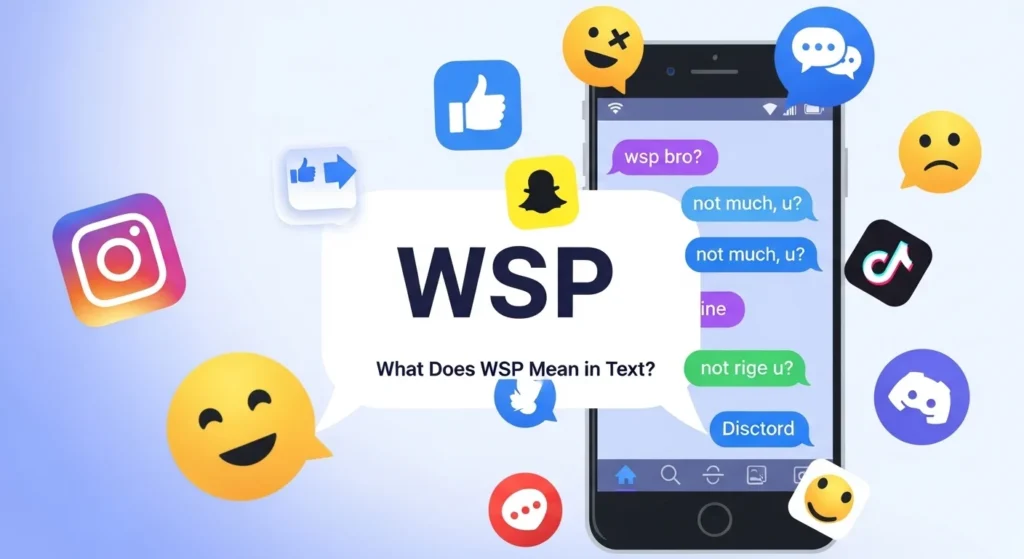
The first time I saw someone text “wsp bro” in a group chat, I paused. I had no idea if it was a typo, a secret code, or some new slang I hadn’t heard yet. Then I noticed it popping up everywhere—on Instagram DMs, Snapchat conversations, and even TikTok comment threads. People used it casually, like a quick way to check in or start a conversation.
At first, I felt completely out of the loop, but after a little research, I realized it’s one of those modern texting abbreviations that makes online chats faster and more casual. Understanding what WSP means can make your online interactions smoother and more fun.
Quick Answer:
WSP is a casual slang abbreviation for “what’s up,” used to ask how someone is or start a conversation.
What Does WSP Mean in Text?
In texting and online chat, WSP stands for “what’s up.” It’s a short, friendly way to ask how someone is doing or check in on them.
Plain-English Explanation
When someone texts wsp, they’re basically saying:
- “Hey, how’s it going?”
- “What’s happening?”
- “What are you up to?”
It’s a quick and casual conversation starter, perfect for informal texting, social media messaging, or DMs.
Why People Use It
People use WSP because:
- it’s fast and easy to type
- it keeps the tone relaxed and friendly
- it fits modern texting culture, especially among young adults and teens
- it works in both one-on-one and group chats
Example Sentence
“hey man, wsp? haven’t talked in a while.”
Summary: WSP is shorthand for “what’s up,” a casual way to greet someone or start a conversation online.
Where Is WSP Commonly Used?
WSP is mainly used in informal digital conversations, and you’ll see it across several platforms.
Text Messages
Friends often use it to start a chat or check in.
Example: “wsp dude, how was your weekend?”
Social Media Platforms
On Instagram, Snapchat, and TikTok, WSP is common in comments, DMs, and replies.
Example: “wsp bro, saw your story lol”
Gaming Chats
Gamers often use WSP in casual online play to greet teammates or opponents.
Example: “wsp guys, ready for the match?”
Online Forums and Communities
Platforms like Discord or Reddit often see WSP in casual threads.
Example: “wsp everyone, new to this server”
Tone
- Casual and informal
- Friendly and approachable
- Not suitable for professional or formal communication
Realistic Conversation Examples
Here are some natural texting examples showing how WSP is used:
- friend 1: wsp bro
friend 2: not much, just chilling - friend 1: wsp man, you free today?
friend 2: yeah, we can hang - friend 1: wsp, saw your new vid lol
friend 2: haha thanks, took forever to edit - friend 1: wsp homie, how’s work?
friend 2: stressful but surviving - friend 1: wsp everyone in the chat
friend 2: not much, just scrolling - friend 1: wsp dude, wanna play later?
friend 2: sure, let’s go - friend 1: wsp girl, long time no see
friend 2: right? been busy with school - friend 1: wsp guys, who’s online?
friend 2: me, ready for the game - friend 1: wsp fam, any plans tonight?
friend 2: just staying in, u?
When to Use and When Not to Use WSP
Even though WSP is popular, knowing the right context is important.
Do Use WSP When
- texting friends or peers
- starting casual conversations
- messaging on social media or gaming apps
- checking in on someone informally
Don’t Use WSP When
- messaging teachers, bosses, or colleagues
- writing emails or formal documents
- in professional settings
- when clarity is crucial for understanding
Quick Comparison Table
| Context | Example Phrase | Why It Works / Doesn’t Work |
|---|---|---|
| texting a friend | “wsp bro, you free?” | casual, friendly greeting |
| instagram dm | “wsp, saw your story” | informal and social media appropriate |
| gaming chat | “wsp guys, ready to play?” | fast, casual greeting |
| work email | “wsp, I completed the report” | too informal, unprofessional |
| school assignment | “wsp, the essay is due tomorrow” | slang not suitable |
Similar Slang Words and Alternatives
If you want alternatives to WSP, several other abbreviations or slang work similarly:
| Slang | Meaning | When to Use |
|---|---|---|
| sup | short for “what’s up” | casual, informal chat |
| wyd | “what are you doing?” | checking in or starting a conversation |
| hey | simple greeting | universal, friendly |
| yo | attention-grabbing greeting | informal, friendly |
| hi | basic greeting | polite, informal |
| hru | “how are you?” | checking in on someone |
Example
Instead of: “wsp dude?”
You could say:
- “sup dude?”
- “wyd today?”
- “yo, what’s up?”
All are casual conversation starters that fit texting and social media culture.
Frequently Asked Questions (FAQs)
1. What does WSP mean in text?
WSP stands for “what’s up,” a casual greeting used to start conversations online or via text.
2. Is WSP positive or negative?
It’s neutral to positive, simply a way to greet someone or ask how they’re doing.
3. Who uses WSP the most?
It’s popular among teens, young adults, gamers, and social media users.
4. Is WSP appropriate for professional messages?
No. WSP is informal and should not be used in emails or professional communication.
5. Can WSP mean anything else?
Occasionally, in niche contexts it could have other meanings, but in texting and social media slang, it almost always means “what’s up.”
6. How do you reply to WSP?
Common replies include:
- “not much, u?”
- “just chilling, wbu?”
- “hey, all good here”
7. Is WSP only used in one-on-one chats?
No. It can be used in group chats, DMs, and online communities, making it versatile for casual conversation.
Final Thought
WSP is a quick, friendly way to start a conversation online or via text. It’s simple, casual, and perfect for connecting with friends, peers, or social media followers. Knowing what WSP means helps you navigate online chats confidently and keep conversations flowing.
While it’s informal and not suitable for professional contexts, it’s one of those little abbreviations that makes texting faster, friendlier, and more relatable. Next time someone types “wsp?”, you’ll know it’s just a casual way of saying “what’s up.”

Abdul Hadi is a writer who loves creating funny and engaging content. He enjoys making readers laugh with clever jokes and puns. His work focuses on humor that appeals to people of all ages.