The first time I saw someone type, “I think I’m having a panic attack,” it was in a late-night group chat. The conversation had been full of jokes and memes until everything suddenly shifted. Friends started asking questions, offering support, and encouraging the person to seek help. It made me realize that while many of us hear the term online, not everyone truly understands what it means.
Maybe you’ve seen people mention panic attacks on TikTok, Reddit, Instagram, or in private messages. You might even be wondering if you’ve experienced one yourself. If you’ve searched “what does a panic attack feel like,” you’re looking for answers that are clear, honest, and easy to understand.
Quick Answer
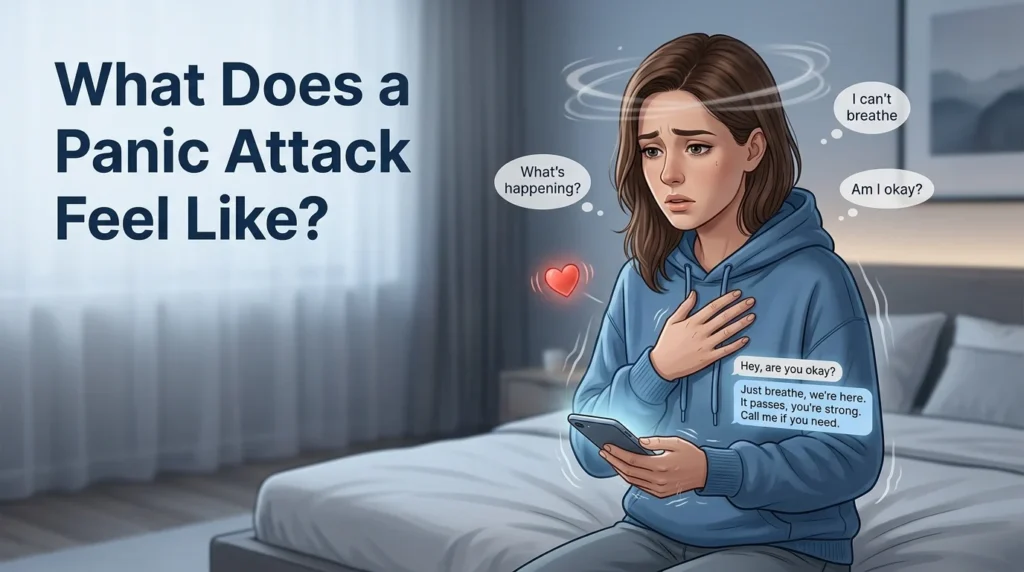
A panic attack feels like a sudden rush of intense fear combined with physical symptoms such as a racing heart, shortness of breath, dizziness, shaking, and a strong feeling that something bad is about to happen.
What Does a Panic Attack Feel Like? Meaning Explained
Unlike many terms that trend in texting culture, panic attack is not a texting abbreviation, chat shorthand, or social media slang. It is a real experience that affects both the mind and the body.
A panic attack happens when your body’s natural alarm system suddenly turns on, even when there is no clear danger nearby. The brain reacts as if you are facing a threat, causing emotional distress and noticeable physical symptoms.
Is There a Full Form?
No. The phrase panic attack is not an acronym or abbreviation. It is the medical and everyday term used to describe a sudden episode of overwhelming fear.
Plain-English Explanation
Think of it this way: your body suddenly presses the emergency button without warning.
You may feel convinced that something terrible is happening, even if you’re safe.
Although panic attacks can be frightening, they are temporary experiences.
Why Do People Use This Term?
People use the phrase panic attack to describe an intense experience that goes beyond ordinary stress or nervousness. It helps explain a collection of emotional and physical symptoms that happen together.
Example Sentence
“I was sitting in a meeting when my chest tightened and my hands started shaking. Later, I learned I had experienced a panic attack.”
Summary: A panic attack is a sudden episode of intense fear that triggers powerful emotional and physical reactions, even without immediate danger.
What Does a Panic Attack Feel Like Physically?
One reason this question is searched so often is because panic attacks can feel extremely physical.
Common symptoms include:
- Racing heartbeat
- Heart palpitations
- Chest pain or tightness
- Shortness of breath
- Rapid breathing
- Sweating
- Shaking or trembling
- Dizziness
- Feeling faint
- Nausea
- Hot flashes
- Chills
- Tingling sensations
- Numbness in the hands or feet
- Dry mouth
For many people, these symptoms are so intense that they believe they are having a heart attack or another medical emergency.
What Does a Panic Attack Feel Like Emotionally?
The emotional symptoms can be just as powerful as the physical ones.
People often describe feeling:
- Extreme fear
- A sense of doom
- Terror without explanation
- Fear of losing control
- Fear of dying
- Confusion
- Helplessness
- Embarrassment
- Frustration
Some individuals also develop anxiety about experiencing another panic attack, which can affect their daily routines.
Where Is the Term Commonly Used Online?
Although panic attacks are serious experiences, conversations about them frequently appear in digital communication.
Text Messages
Friends often check in by asking questions like:
“was it a panic attack?”
“are you okay now?”
Social Media Platforms
People openly discuss mental health experiences on:
- TikTok
- X
- Snapchat
Comments Sections
Users share personal stories, coping tips, and words of encouragement.
Direct Messages (DMs)
Many people feel more comfortable discussing panic attacks privately.
Gaming Chats
Players sometimes explain stepping away from a game because they don’t feel well emotionally or physically.
Online Forums
Mental health communities provide support, education, and shared experiences.
Tone of the Term
The tone is usually:
- Neutral
- Supportive
- Serious
- Informal in everyday conversations
- More formal in healthcare settings
Because panic attacks involve mental health, the term should always be used respectfully.
Realistic Conversation Examples
These examples show how people naturally discuss panic attacks in online chats.
- “i honestly thought i was having a heart attack.”
- “my hands started tingling and i couldn’t catch my breath.”
- “have you ever had a panic attack before? it scared me so much.”
- “thanks for staying on the phone with me while it happened.”
- “it came out of nowhere while i was just watching videos.”
- “i felt like something terrible was about to happen.”
- “i had to leave class because i couldn’t stop shaking.”
- “the doctor told me it was a panic attack and not a heart problem.”
- “i didn’t know anxiety could make your body react like that.”
- “i’m okay now, but it was honestly one of the scariest things i’ve experienced.”
When to Use and When Not to Use the Term
Using the phrase correctly helps reduce misunderstandings and stigma.
Do
- Use the term when describing a genuine panic attack experience.
- Talk about mental health with empathy.
- Support people who share their experiences.
- Encourage professional help if symptoms continue.
- Educate yourself about the signs and symptoms.
Don’t
- Use the term casually for everyday stress.
- Make jokes about panic attacks.
- Assume everyone experiences them the same way.
- Diagnose other people online.
- Ignore severe symptoms that deserve medical evaluation.
Comparison Table
| Context | Example Phrase | Why It Works |
|---|---|---|
| Appropriate | “i had a panic attack during my presentation.” | Describes a real experience accurately. |
| Appropriate | “my therapist helped me understand my panic attacks.” | Uses the term respectfully. |
| Inappropriate | “i had a panic attack because my pizza arrived late.” | Trivializes a serious condition. |
| Inappropriate | “everyone gets panic attacks over small things.” | Creates harmful misunderstandings. |
Similar Terms and Alternatives
Although people sometimes use these terms interchangeably, they have different meanings.
| Term | Meaning | When to Use |
|---|---|---|
| Anxiety | General feelings of worry or nervousness | Everyday discussions about stress |
| Anxiety attack | Informal phrase for intense anxiety | Non-clinical conversations |
| Panic disorder | Repeated panic attacks with ongoing fear | Medical discussions |
| Fight-or-flight response | The body’s survival mechanism | Explaining physical reactions |
| Stress response | Reaction to challenging situations | Less intense experiences |
| Social anxiety | Fear related to social situations | Conversations about social discomfort |
| Hyperventilation | Rapid breathing | Discussing breathing symptoms |
Understanding these differences makes conversations more accurate and helpful.
Frequently Asked Questions
1. What does a panic attack feel like for most people?
Most people describe sudden fear along with symptoms such as a racing heart, dizziness, chest tightness, and difficulty breathing.
2. Can a panic attack feel like a heart attack?
Yes. Many individuals mistake panic attacks for heart attacks because the symptoms can be very similar.
3. How long does a panic attack usually last?
Panic attacks often peak within about 10 minutes, although some symptoms can continue longer.
4. Can panic attacks happen without warning?
Yes. Some occur unexpectedly, even during calm situations.
5. Is panic attack a texting abbreviation or social media slang?
No. Unlike common chat shorthand or texting abbreviations, panic attack is a recognized term describing a real experience.
6. Can teenagers experience panic attacks?
Yes. Panic attacks can affect people of different ages, including teenagers and adults.
7. Should I seek professional help if I think I’m having panic attacks?
If panic attacks are frequent, severe, or interfering with daily life, speaking with a healthcare professional can help you understand and manage them.
Final Thought
If you’ve been wondering what does a panic attack feel like, the answer is that it can feel both physically and emotionally overwhelming. Many people describe it as one of the most frightening experiences they’ve had because the symptoms can appear suddenly and seem very real.
Learning about panic attacks helps replace fear with understanding. If you’re researching for yourself, supporting a friend, or trying to make sense of something you read online, accurate information matters. In today’s world of texting culture, social media conversations, and online communities, understanding mental health experiences allows us to communicate with greater empathy, awareness, and compassion.

Abdul Hadi is a writer who loves creating funny and engaging content. He enjoys making readers laugh with clever jokes and puns. His work focuses on humor that appeals to people of all ages.