
Have you ever downloaded a file from a website, opened an email attachment, or received a school assignment and noticed it ended with “.pdf”? The first time I saw a PDF file, I had no idea what those three letters meant.
A teacher emailed a document and told everyone to open the PDF. Like many people, I simply clicked it without understanding what PDF actually stood for. Over time, I realized PDFs are everywhere—from resumes and ebooks to invoices and forms. If you’ve ever wondered what does PDF stand for, this guide will explain the meaning, uses, examples, and importance of PDF files in simple language.
Quick Answer: PDF stands for Portable Document Format, a file format designed to display documents consistently across different devices and operating systems.
What Does PDF Stand For?
PDF is one of the most widely used digital file formats in the world.
Full Form of PDF
PDF = Portable Document Format
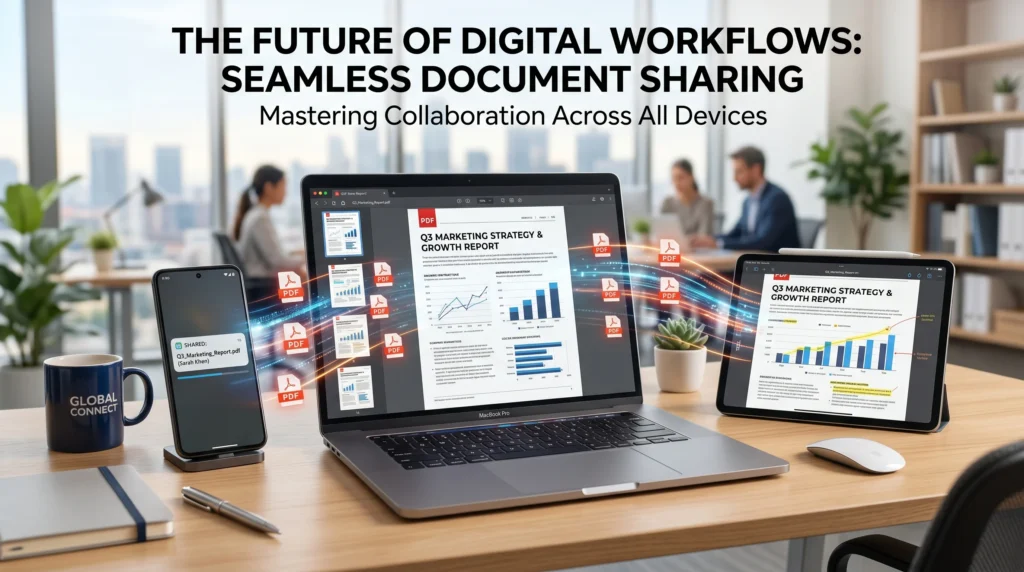
The format was created to allow people to share documents that look the same no matter what device, computer, or software is being used.
Plain-English Explanation
A PDF is a type of file that keeps the layout, fonts, images, and formatting of a document intact.
For example, if you create a document on your computer and save it as a PDF, someone else can open it on a different device and see the same design and formatting.
Why Do People Use PDFs?
People use PDFs because:
- They preserve formatting.
- They are easy to share.
- They work on most devices.
- They are widely accepted.
- They are useful for professional documents.
Example Sentence
“Please send your resume as a PDF file.”
In this example, PDF refers to the document format being requested.
Summary: PDF stands for Portable Document Format and allows documents to be shared while keeping their original appearance.
Where Is PDF Commonly Used?
PDF files are used in many areas of daily life.
Email Attachments
Many businesses and individuals send important documents as PDFs.
Schools and Universities
Students often receive:
- Assignments
- Study guides
- Worksheets
- Course materials
in PDF format.
Business Documents
Companies frequently use PDFs for:
- Contracts
- Reports
- Invoices
- Proposals
Websites
Many websites provide downloadable PDFs for forms, brochures, and guides.
Social Media and Online Sharing
Creators sometimes share PDF resources, planners, checklists, and ebooks.
Government Forms
Government agencies often publish forms as PDF documents.
Tone of PDF
Unlike texting slang, PDF is generally:
- Neutral
- Professional
- Formal
- Universal
It is commonly used in both casual and professional communication.
Realistic Conversation Examples
Here are examples showing how PDF is used in everyday conversations.
Example 1
friend 1: can you send me the notes?
friend 2: sure, i’ll send the pdf
Example 2
student 1: where’s the homework?
student 2: it’s in the pdf our teacher uploaded
Example 3
friend 1: did you get the resume?
friend 2: yes, it came as a pdf
Example 4
user 1: can you share the guide?
user 2: i’ll upload the pdf
Example 5
employee 1: what format should i use?
employee 2: pdf is best
Example 6
friend 1: the file won’t change, right?
friend 2: no, it’s saved as a pdf
Example 7
student 1: where can i read the ebook?
student 2: download the pdf version
Example 8
user 1: i need the application form
user 2: here’s the pdf
Example 9
friend 1: can i open this on my phone?
friend 2: yes, it’s a pdf
Example 10
employee 1: should i print it?
employee 2: just use the pdf copy
When to Use PDF
Understanding when to use PDFs can make sharing documents easier.
PDF Usage Comparison Table
| Context | Example Phrase | Why It Works or Doesn’t Work |
|---|---|---|
| Resume submission | “send a pdf resume” | Professional |
| School assignment | “download the pdf” | Common usage |
| Business report | “attached pdf report” | Appropriate |
| Online guide | “free pdf download” | Standard format |
| Collaborative editing | “edit the pdf together” | Less practical |
| Shared document drafting | “use pdf for editing” | Not ideal |
Similar File Formats and Alternatives
Several file formats serve purposes similar to PDF.
| Format | Meaning | Best Use |
|---|---|---|
| DOCX | Word Document | Editing documents |
| TXT | Text File | Plain text |
| RTF | Rich Text Format | Basic formatting |
| XLSX | Spreadsheet File | Data and calculations |
| PPTX | Presentation File | Slideshows |
| EPUB | Ebook Format | Digital books |
PDF vs DOCX
PDF files are designed for viewing and sharing.
DOCX files are designed for editing.
PDF vs TXT
TXT files contain plain text.
PDF files support images, formatting, graphics, and structured layouts.
Why Are PDFs So Popular?
PDF files became popular because they solve a common problem.
Before PDFs, documents often looked different when opened on another computer.
A PDF ensures that:
- Fonts stay the same.
- Images remain in place.
- Layouts stay consistent.
- Documents look professional.
- Files are easy to distribute.
Because of these benefits, PDFs are used worldwide every day.
Advantages of PDF Files
PDF files offer several benefits.
Consistent Appearance
The document looks the same on different devices.
Easy Sharing
PDFs can be emailed, uploaded, or downloaded easily.
Security Features
Some PDFs can be password-protected.
Professional Presentation
Businesses often prefer PDFs because they appear polished and organized.
Device Compatibility
Most phones, tablets, and computers can open PDF files.
Frequently Asked Questions
What does PDF stand for?
PDF stands for Portable Document Format.
What is a PDF file?
A PDF file is a digital document format that preserves the appearance and layout of a document.
Who created PDF?
PDF was developed by Adobe.
Can PDF files be edited?
Yes, but editing usually requires special software or conversion tools.
Are PDF files safe?
Most PDFs are safe, but you should only download files from trusted sources.
Why do employers request PDF resumes?
PDF resumes keep formatting consistent and look professional on different devices.
Can I open a PDF on my phone?
Yes. Most smartphones include apps that can open PDF files.
Final Thought
If you’ve been asking what does PDF stand for, the answer is straightforward. PDF means Portable Document Format, a file type created to make document sharing easy and reliable.
Whether you’re sending a resume, downloading a guide, reading an ebook, or reviewing a contract, PDFs help ensure that documents look the same for everyone who opens them. Thanks to their reliability, compatibility, and professional appearance, PDF files remain one of the most important formats in modern digital communication.