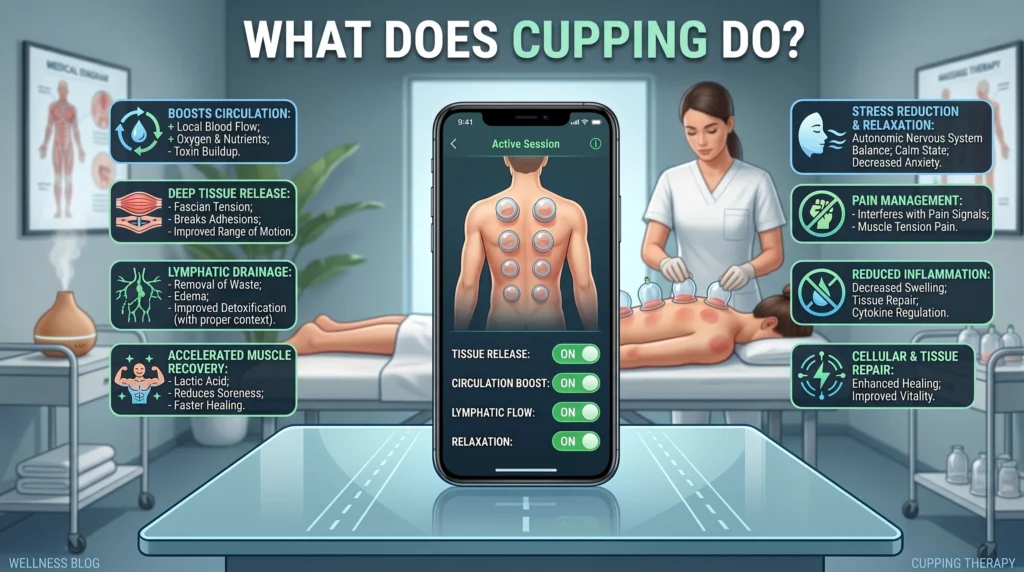
Have you ever seen an athlete or celebrity with round red marks on their back and wondered what caused them? The first time I noticed those marks, I thought they were bruises from an injury. Later, I learned they came from a treatment called cupping therapy.
Over the years, cupping has become more popular on social media, wellness blogs, and sports programs. Some people use it to help with muscle soreness, while others try it for relaxation and recovery. If you’re curious about what cupping does and why people use it, this guide explains everything in simple language.
Quick Answer:
Cupping is a therapy that uses suction cups on the skin to increase blood flow, relieve muscle tension, and promote relaxation.
What Does Cupping Do?
Cupping therapy involves placing special cups on the skin to create gentle suction.
The suction pulls the skin slightly upward, which may increase blood circulation in the treated area. Many people use cupping as part of massage therapy, sports recovery, or traditional wellness practices.
Common reasons people try cupping include:
- Reducing muscle tension
- Improving blood flow
- Supporting recovery after exercise
- Promoting relaxation
- Relieving temporary soreness
- Helping people feel less stiff
Example
After an intense workout, an athlete may receive cupping therapy on their back or shoulders to help with muscle recovery.
In simple terms, cupping uses suction on the skin to encourage circulation and help relax tight muscles.
How Does Cupping Work?
A therapist places cups on specific areas of the body.
The cups create suction using heat or a small pump. This suction gently lifts the skin and underlying tissue.
The treatment usually lasts between 5 and 20 minutes, depending on the technique and purpose.
Many people notice circular marks afterward. These marks are usually temporary and often fade within several days to a couple of weeks.
Types of Cupping Therapy
Dry Cupping
This is the most common type.
The cups create suction but no skin is cut or punctured.
Moving Cupping
The therapist applies oil to the skin and moves the cups around like a massage.
Wet Cupping
This technique involves small skin pricks and should only be performed by properly trained professionals in settings where it is permitted and regulated.
Where Is Cupping Commonly Used?
People may receive cupping therapy in:
- Wellness clinics
- Physical therapy centers
- Sports recovery facilities
- Massage therapy clinics
- Alternative medicine practices
The tone surrounding cupping is generally health-related and educational rather than casual internet slang.
Why Do People Use Cupping?
Different people seek cupping for different reasons.
Muscle Recovery
Athletes often use cupping after training sessions.
Relaxation
Some people report feeling relaxed after treatment.
Temporary Muscle Soreness
Cupping is commonly used on areas that feel tight or sore.
Wellness Routines
Many individuals include cupping as part of a broader self-care or recovery plan.
What Does Cupping Feel Like?
Most people describe the sensation as:
- Gentle pulling
- Tightness on the skin
- Mild pressure
- Warmth in the treated area
It should not feel extremely painful. However, individual experiences can vary.
Conversation Examples
Here are realistic examples of how people discuss cupping:
- “i tried cupping therapy after my workout.”
- “those red circles came from cupping.”
- “my shoulders felt less tight afterward.”
- “the therapist recommended cupping for recovery.”
- “cupping creates suction on the skin.”
- “many athletes use cupping treatments.”
- “i was surprised by the marks it left.”
- “the session only took about fifteen minutes.”
- “some people use cupping for relaxation.”
- “i wanted to see what cupping was like.”
When to Use and When Not to Use Cupping
Do
- Visit a qualified professional.
- Discuss any health concerns beforehand.
- Follow aftercare instructions.
- Understand that results vary.
- Use it as part of a broader wellness plan.
Don’t
- Perform advanced techniques without training.
- Expect guaranteed results.
- Ignore medical advice.
- Use damaged or infected skin areas.
- Replace necessary medical treatment with cupping alone.
| Context | Example Phrase | Why It Works |
|---|---|---|
| Sports Recovery | Cupping may help with muscle recovery | Appropriate |
| Wellness Visit | I booked a cupping session | Appropriate |
| Relaxation | Many people find it relaxing | Appropriate |
| Guaranteed Cure | Cupping cures every problem | Not Appropriate |
| Professional Care | Visit a trained practitioner | Appropriate |
Similar Therapies and Alternatives
| Therapy | Purpose |
|---|---|
| Cupping | Suction-based therapy |
| Massage Therapy | Muscle relaxation |
| Foam Rolling | Self-myofascial release |
| Stretching | Flexibility and mobility |
| Physical Therapy | Rehabilitation and movement improvement |
| Acupuncture | Traditional needle-based therapy |
Each method works differently and may suit different needs.
Are There Side Effects?
Some temporary effects can include:
- Circular skin marks
- Mild soreness
- Skin sensitivity
- Temporary discoloration
Anyone with medical concerns should speak with a healthcare professional before trying cupping therapy.
FAQs
What does cupping do?
Cupping creates suction on the skin that may help improve circulation, reduce muscle tension, and promote relaxation.
Why does cupping leave marks?
The suction affects small blood vessels near the skin’s surface, creating temporary circular marks.
Does cupping hurt?
Most people feel pulling or pressure rather than significant pain.
How long do cupping marks last?
Marks often fade within several days to two weeks, depending on the person and treatment.
Do athletes use cupping?
Yes. Many athletes use cupping as part of their recovery and wellness routines.
Can anyone get cupping?
Not everyone is a suitable candidate. It’s best to consult a qualified healthcare provider or trained practitioner.
Is cupping a medical treatment?
Cupping is generally considered a complementary therapy rather than a replacement for conventional medical care.
Final Thought
If you’ve been wondering what does cupping do, the answer is that it uses suction to stimulate circulation, relieve muscle tension, and support relaxation. While experiences vary from person to person, many people use cupping as part of their wellness, recovery, and self-care routines.
Whether you’re an athlete looking for recovery options or simply curious about the circular marks you’ve seen online, understanding how cupping works can help you make informed decisions about your health and wellness journey.

Rohan Ahmed writes fun and entertaining content that makes people laugh. He enjoys creating clever jokes, puns, and lighthearted stories. His work is designed to bring smiles to readers of all ages.