The first time I saw the phrase “non binary”, it popped up in the comments section of a social media post. People were introducing themselves and sharing their pronouns. Some wrote “she/her,” others used “he/him,” and a few said they were non binary. If you had never heard the term before, you might have wondered what it meant and why so many people were talking about it online.
Today, terms related to identity show up everywhere—from TikTok videos and Instagram captions to gaming chats and group texts. While the phrase may sound confusing at first, understanding it is actually much simpler than many people think.
If you’ve been asking, “what does non binary mean?”, this guide will explain it in clear, everyday language.
Quick Answer: Non binary means a person does not identify exclusively as male or female.
What Does Non Binary Mean?
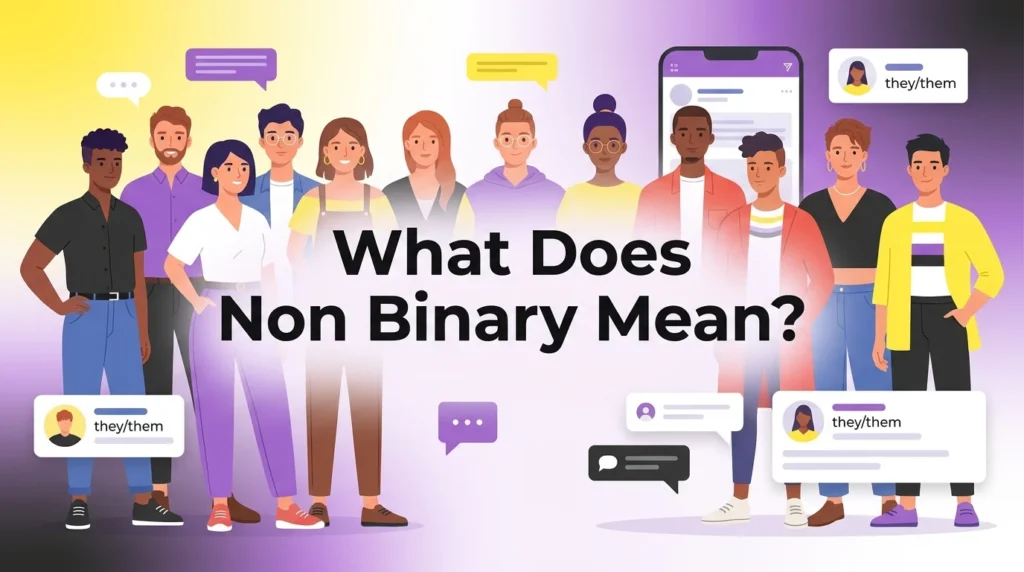
The term non binary describes a gender identity that exists outside the traditional categories of only being a man or a woman.
For many people, gender is viewed as two options: male or female. However, non binary individuals may identify as both, neither, somewhere in between, or differently altogether.
There is no full form because non binary is not a texting abbreviation or chat shorthand. It is a gender identity.
People use this term because it helps describe how they understand and express themselves.
Example Sentence
“My friend is non binary and uses they/them pronouns.”
In simple terms, non binary means a person’s gender identity isn’t limited to being only male or only female.
Where Is the Term Commonly Used?
Because conversations about identity happen frequently online, you may encounter the term in many digital spaces.
Social Media Platforms
People may mention being non binary in their profiles, captions, videos, or comment sections.
DMs and Group Chats
Friends sometimes discuss pronouns and identity in private conversations.
Online Forums
Communities focused on support, education, or shared experiences often use the term.
Gaming Chats
Some gamers include their pronouns in profiles or introductions.
School and Workplace Discussions
Many organizations encourage respectful communication and inclusive language.
Tone of the Term
The tone is generally neutral and respectful. It is not slang, an insult, or a joke.
Realistic Conversation Examples
Here are examples of how the term might appear in everyday chats:
- “hey, just so you know, i’m non binary and use they/them pronouns.”
- “thanks for telling me! i’ll remember that.”
- “i saw someone describe themselves as non binary. what does that mean?”
- “it means they don’t identify only as male or female.”
- “my cousin recently came out as non binary.”
- “cool, thanks for sharing that with me.”
- “does your teacher ask everyone for pronouns now?”
- “yeah, it helps everyone feel respected.”
- “i wasn’t familiar with the term before, but i’m learning more about it.”
- “same here. asking respectful questions really helps.”
When to Use and When Not to Use the Term
Using the term correctly shows respect and understanding.
Do
- Use the term if someone identifies themselves as non binary.
- Respect the pronouns a person asks you to use.
- Ask polite questions if you’re unsure.
- Keep an open mind while learning.
- Use a respectful tone.
Don’t
- Assume someone’s gender identity.
- Treat the term as slang or a joke.
- Debate someone’s identity unnecessarily.
- Ignore someone’s stated pronouns on purpose.
- Use the term to insult or mock others.
Comparison Table
| Context | Example Phrase | Why It Works |
|---|---|---|
| Appropriate | “They identify as non binary.” | Respectful and accurate |
| Appropriate | “What pronouns do you use?” | Polite and inclusive |
| Not Appropriate | “You don’t look non binary.” | Makes assumptions |
| Not Appropriate | “It’s just a trend.” | Dismissive and disrespectful |
Similar Terms and Related Identities
While these terms are related, they are not exactly the same.
| Term | Meaning | When Used |
|---|---|---|
| Genderqueer | Broad identity outside traditional gender categories | Personal identity |
| Genderfluid | Gender identity changes over time | Self-description |
| Agender | Identifies with no gender | Personal identity |
| Cisgender | Gender identity matches sex assigned at birth | Educational discussions |
| Transgender | Gender identity differs from sex assigned at birth | Identity discussions |
| Pronouns | Words used to refer to someone | Everyday communication |
Remember, individuals choose the labels that best fit their experiences.
Why Understanding Non Binary Matters
Learning what non binary means helps create more respectful conversations.
You don’t have to know everything immediately. Many people first hear the term online and begin learning from there.
Showing kindness, listening, and using the language people prefer can strengthen relationships and reduce misunderstandings.
Understanding different experiences also helps build more inclusive communities, both online and offline.
Frequently Asked Questions
Is non binary a slang term?
No. Non binary is a gender identity, not social media slang or a texting abbreviation.
Is being non binary the same as being transgender?
Some non binary people identify as transgender, while others do not. Personal experiences vary.
What pronouns do non binary people use?
Many use they/them pronouns, but some use he/him, she/her, or other pronouns.
Is non binary a new concept?
No. Cultures around the world have recognized gender diversity throughout history, although the language used may differ.
Can teenagers identify as non binary?
Yes. People of different ages may identify as non binary.
Should I ask someone if they’re non binary?
Only if it’s relevant and done respectfully. Avoid pressuring people to share personal information.
What if I accidentally use the wrong pronoun?
Apologize briefly, correct yourself, and move forward respectfully.
Final Thought
Understanding what does non binary mean is less about memorizing definitions and more about treating people with respect. Non binary individuals simply describe their gender identity in a way that feels true to who they are.
If you first encountered the term through social media, a group chat, a gaming community, or a conversation with a friend, taking the time to learn its meaning can help you communicate more thoughtfully. You don’t need to have all the answers right away. Curiosity, kindness, and respect go a long way in today’s connected world.

Joseph Tylor is a writer who loves crafting humorous and engaging content. He enjoys creating clever jokes, puns, and lighthearted stories. His work aims to entertain and bring smiles to readers of all ages.