The first time I saw someone ask, “What does spotting look like?” was in an online parenting forum. Within minutes, dozens of people shared their experiences. Some described seeing a few pink spots on toilet paper, while others mentioned brown discharge that appeared unexpectedly between periods. Reading those comments made me realize just how common this question is—and how confusing the answer can be.
If you’ve noticed light bleeding and aren’t sure whether it’s spotting or a regular period, you’re not alone. Many people turn to social media, group chats, and online communities for answers. Understanding what spotting looks like can help you feel more informed and know when it’s time to check in with a healthcare provider.
Quick Answer
Spotting usually looks like a few drops or light streaks of pink, red, or brown blood that appear outside of your normal menstrual period and are much lighter than a regular flow.
What Does Spotting Look Like?
Spotting refers to very light vaginal bleeding that happens outside your usual menstrual period.
Unlike a normal period, spotting doesn’t typically require a pad or tampon because the amount of blood is minimal. Some people only notice it when wiping after using the bathroom.
Plain-English Explanation
Think of spotting as “light bleeding.”
Instead of a steady flow, you may notice:
- Small spots of blood
- Light streaks on underwear
- Tiny amounts of blood on toilet paper
- Mild brown discharge
- Pink-tinged spotting
The appearance can vary from person to person.
Why Do People Ask About Spotting?
People often search this question because spotting can happen unexpectedly and may cause concern.
They may wonder if it’s:
- The start of a period
- Implantation bleeding
- A side effect of birth control
- A sign of hormonal changes
- Something that needs medical attention
Example Sentence
“I noticed a few brown spots on my underwear and wondered if it was spotting or the beginning of my period.”
Summary: Spotting is light vaginal bleeding that appears as small amounts of pink, red, or brown blood and is usually much lighter than a normal period.
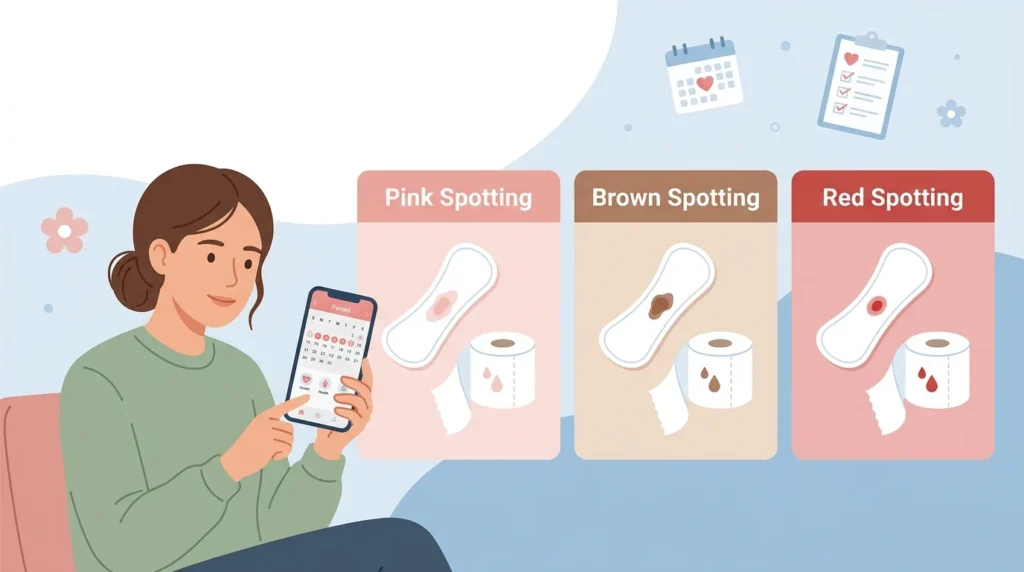
What Does Spotting Actually Look Like?
The appearance of spotting can differ depending on the cause.
Pink Spotting
Pink spotting often appears as:
- Very light pink drops
- Faint pink streaks
- Diluted blood mixed with cervical fluid
Brown Spotting
Brown spotting is common and may look like:
- Rust-colored discharge
- Light brown stains
- Old blood leaving the body
Red Spotting
Red spotting tends to be:
- Bright red drops
- Fresh blood in small amounts
- Tiny spots on underwear
How Much Blood Is Typical?
Spotting usually involves:
- A few drops
- Small stains
- Minimal bleeding
- No heavy flow
- No large clots
Many people don’t need menstrual products because the bleeding is so light.
Where Is This Term Commonly Discussed Online?
Questions about spotting frequently appear in digital spaces where people seek reassurance and shared experiences.
Text Messages
Friends may ask:
“is this normal spotting?”
Social Media Platforms
People discuss spotting on:
- TikTok
- X
Online Forums
Communities often share personal experiences and advice.
DMs
Private conversations allow people to ask sensitive health questions.
Pregnancy Groups
Expecting parents frequently discuss spotting symptoms.
Tone of the Term
The tone is generally:
- Neutral
- Informational
- Supportive
- Health-focused
Unlike social media slang or texting abbreviations, spotting is a medical term used in both casual and professional conversations.
Realistic Conversation Examples
These examples reflect how people naturally discuss spotting online.
- “i noticed some light pink spotting today. has anyone else had this?”
- “it’s not enough to fill a pad, just a few brown spots.”
- “could this be spotting or is my period starting?”
- “my doctor said light spotting can happen sometimes.”
- “i only saw it when i wiped.”
- “has anyone experienced spotting while on birth control?”
- “it looked more brown than red.”
- “i’m trying not to panic over a few drops.”
- “the spotting stopped after a day.”
- “i wasn’t expecting spotting between periods.”
When to Use and When Not to Use the Term
Using the term accurately can help communicate symptoms clearly.
Do
- Use it to describe very light bleeding.
- Mention the color and amount if speaking with a healthcare provider.
- Track when it occurs.
- Seek medical advice if you’re concerned.
- Be honest about your symptoms.
Don’t
- Assume all spotting is serious.
- Ignore heavy bleeding.
- Self-diagnose based solely on social media.
- Avoid medical advice if symptoms worsen.
- Confuse spotting with a heavy menstrual flow.
Comparison Table
| Context | Example Phrase | Why It Works |
|---|---|---|
| Appropriate | i’ve had light spotting for two days.” | Accurately describes symptoms |
| Appropriate | “my spotting was brown and very light.” | Provides useful details |
| Inappropriate | “my heavy period was just spotting.” | Spotting is much lighter |
| Inappropriate | Ignoring severe bleeding as spotting | May delay medical care |
Similar Terms and Related Experiences
Several terms are often discussed alongside spotting.
| Term | Meaning | When It Applies |
|---|---|---|
| Menstrual Period | Regular monthly bleeding | Typical menstrual cycle |
| Implantation Bleeding | Light bleeding in early pregnancy | Around implantation timing |
| Breakthrough Bleeding | Bleeding while using hormonal birth control | Medication-related |
| Vaginal Discharge | Fluid produced by the vagina | Normal bodily function |
| Irregular Bleeding | Bleeding outside normal cycles | Various causes |
| Menstrual Flow | The amount of period bleeding | Cycle discussions |
| Hormonal Changes | Shifts in hormone levels | Can contribute to spotting |
Understanding these differences can help reduce confusion.
Frequently Asked Questions
1. What does spotting look like?
Spotting usually appears as light pink, red, or brown blood in very small amounts.
2. Is spotting the same as a period?
No. Spotting is much lighter than a regular menstrual period.
3. Can spotting be brown?
Yes. Brown spotting is common and often represents older blood leaving the body.
4. Is spotting normal?
Spotting can occur for many reasons and is often harmless, but unusual symptoms should be discussed with a healthcare provider.
5. How long does spotting last?
It varies. Some people notice spotting for a few hours, while others experience it for a couple of days.
6. Can spotting happen during pregnancy?
Light spotting can occur during pregnancy, but any bleeding during pregnancy should be discussed with a healthcare provider.
7. When should I seek medical advice?
Seek medical attention if you experience heavy bleeding, severe pain, dizziness, or bleeding that concerns you.
Final Thought
If you’ve been wondering what does spotting look like, the answer is that it usually appears as very light bleeding—often pink, red, or brown—and is much lighter than a normal period. While spotting can be surprising, it’s a common experience with many possible causes.
The internet can provide support and shared experiences, but it shouldn’t replace professional medical advice. Understanding what spotting looks like helps you recognize changes in your body, communicate symptoms clearly, and know when it’s appropriate to seek further guidance from a healthcare provider.

Rohan Ahmed writes fun and entertaining content that makes people laugh. He enjoys creating clever jokes, puns, and lighthearted stories. His work is designed to bring smiles to readers of all ages.