Have you ever heard someone talk about testosterone in a fitness video, health article, or social media post and wondered what it actually does? Many people know testosterone is linked to men, muscles, and strength, but few understand its full role in the body.
The first time I heard about it, it was during a conversation about exercise, and I assumed it was only important for bodybuilders. However, testosterone affects much more than muscle growth. It plays a major role in physical development, energy levels, mood, and overall health. Understanding testosterone can help you better understand how the body works.
Quick Answer:
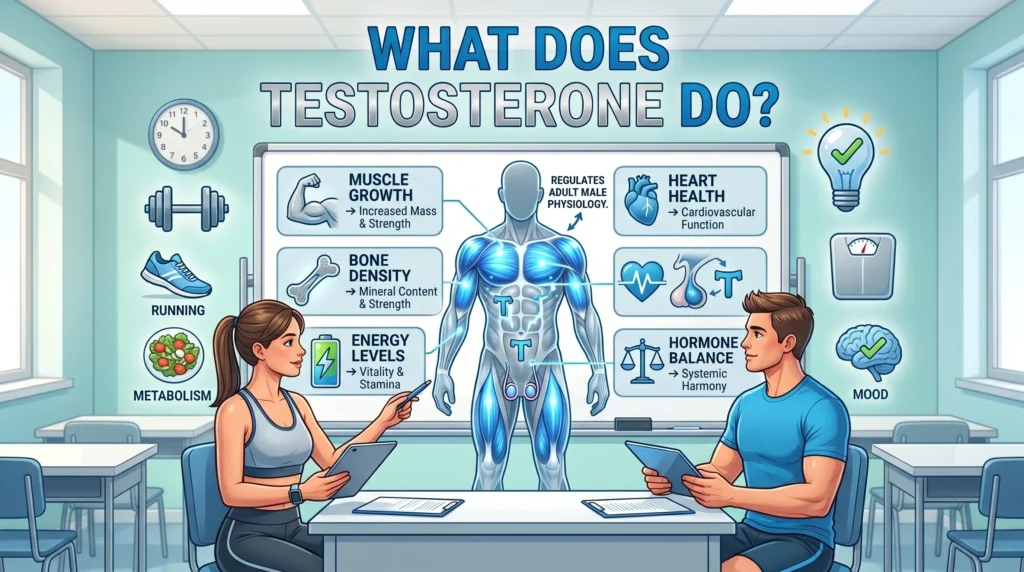
Testosterone is a hormone that helps regulate muscle growth, bone strength, sex drive, energy levels, and many other important body functions.
What Does Testosterone Do?
Testosterone is a hormone produced mainly in the testicles in males and in smaller amounts in the ovaries and adrenal glands in females.
It is often called the primary male sex hormone because it plays a major role in male development. However, both males and females need testosterone for good health.
Some of testosterone’s key jobs include:
- Supporting muscle growth
- Strengthening bones
- Regulating sex drive (libido)
- Helping produce sperm
- Supporting energy levels
- Influencing mood and confidence
- Contributing to body hair growth
Example
During puberty, rising testosterone levels help boys develop deeper voices, facial hair, and increased muscle mass.
In simple terms, testosterone helps the body grow, develop, and function properly.
How Testosterone Affects the Body
Testosterone influences many systems throughout the body.
Muscle Growth
One of testosterone’s most well-known roles is helping build and maintain muscle.
People with healthy testosterone levels often find it easier to gain muscle through exercise and strength training.
Bone Strength
Testosterone helps keep bones strong and dense.
Low levels can increase the risk of weaker bones over time.
Energy Levels
Many people report feeling more energetic when testosterone levels are within a healthy range.
Low testosterone may contribute to fatigue and reduced motivation.
Sex Drive
Testosterone plays an important role in sexual desire in both individuals.
Changes in hormone levels can affect libido.
Mood and Mental Well-Being
Research suggests testosterone can influence mood, confidence, focus, and overall emotional health.
Where Is Testosterone Commonly Discussed?
You may hear about testosterone in:
- Health articles
- Fitness communities
- Medical appointments
- Sports discussions
- Nutrition content
- Wellness blogs
- Educational videos
- Hormone health conversations
The tone is usually neutral and educational, although it may also appear in casual fitness discussions online.
Real-Life Examples of Testosterone’s Role
Here are some everyday situations where testosterone affects the body:
- Building muscle after workouts
- Supporting healthy puberty development
- Maintaining bone strength
- Supporting reproductive health
- Influencing physical performance
- Helping maintain energy levels
- Contributing to body hair growth
- Supporting healthy sex drive
Conversation Examples
Here are realistic examples of how people talk about testosterone:
- “my doctor checked my testosterone levels.”
- “testosterone helps support muscle growth.”
- “he learned about testosterone in biology class.”
- “exercise can support healthy hormone levels.”
- “testosterone plays a role during puberty.”
- “low testosterone can sometimes affect energy.”
- “the article explained what testosterone does.”
- “many athletes discuss testosterone and recovery.”
- “healthy sleep may help hormone balance.”
- “testosterone affects several body systems.”
When to Use and When Not to Use the Term
Do
- Use it when discussing hormones.
- Use it in health and fitness conversations.
- Use it in educational settings.
- Use it when learning about human biology.
- Use it when discussing medical topics.
Don’t
- Assume testosterone only affects men.
- Use it as a synonym for strength alone.
- Self-diagnose hormone issues.
- Ignore medical advice regarding hormone health.
- Oversimplify its role in the body.
| Context | Example Phrase | Why It Works or Doesn’t Work |
|---|---|---|
| Health Discussion | Testosterone supports muscle growth | Correct |
| Biology Class | Testosterone is a hormone | Correct |
| Medical Visit | Let’s check testosterone levels | Correct |
| Oversimplification | Testosterone only affects muscles | Incorrect |
| Health Education | Testosterone affects multiple systems | Correct |
Related Hormones and Terms
| Term | Meaning | Main Role |
|---|---|---|
| Testosterone | Primary sex hormone | Growth and development |
| Estrogen | Major female sex hormone | Reproductive and bone health |
| Progesterone | Reproductive hormone | Menstrual and pregnancy support |
| Cortisol | Stress hormone | Stress response |
| Insulin | Blood sugar hormone | Glucose regulation |
| Growth Hormone | Growth-supporting hormone | Development and tissue growth |
Understanding these hormones helps provide a clearer picture of overall health.
Signs of Low Testosterone
While only a healthcare professional can diagnose hormone issues, low testosterone may sometimes be associated with:
- Reduced energy
- Lower sex drive
- Difficulty building muscle
- Mood changes
- Reduced strength
- Increased fatigue
Anyone concerned about symptoms should consult a qualified healthcare provider.
How to Support Healthy Testosterone Levels
Healthy lifestyle habits may help support overall hormone health:
- Get enough sleep
- Exercise regularly
- Maintain a balanced diet
- Manage stress
- Stay physically active
- Maintain a healthy weight
These habits support overall wellness, not just testosterone levels.
FAQs
What does testosterone do in the body?
Testosterone supports muscle growth, bone strength, energy, reproductive health, and sex drive.
Is testosterone only important for men?
No. Both individuals produce testosterone and need it for healthy body function.
What happens during puberty?
Testosterone helps drive many physical changes such as deeper voices, increased muscle mass, and body hair growth.
Can testosterone affect mood?
Yes. Testosterone can influence mood, confidence, focus, and emotional well-being.
Does testosterone help build muscle?
Yes. Testosterone supports muscle development and maintenance.
How do doctors measure testosterone?
Doctors typically measure testosterone levels through blood tests.
Can lifestyle affect testosterone?
Healthy sleep, exercise, nutrition, and stress management can support overall hormone health.
Final Thought
If you’ve been wondering what does testosterone do, the answer is that it plays a vital role in many aspects of health. Testosterone supports muscle growth, bone strength, energy levels, mood, reproductive health, and physical development.
Although it is often associated with men, bothindividuals rely on testosterone for proper body function. Understanding this important hormone can help you make informed decisions about your health and appreciate the many systems working together inside the body every day.

Rohan Ahmed writes fun and entertaining content that makes people laugh. He enjoys creating clever jokes, puns, and lighthearted stories. His work is designed to bring smiles to readers of all ages.